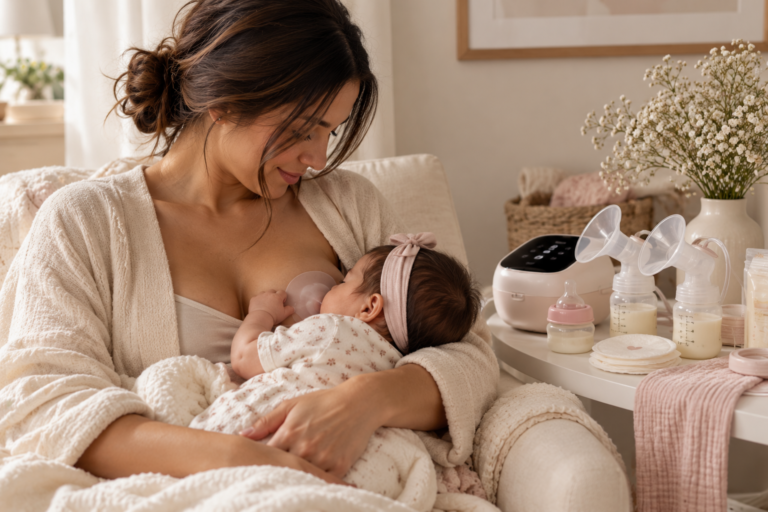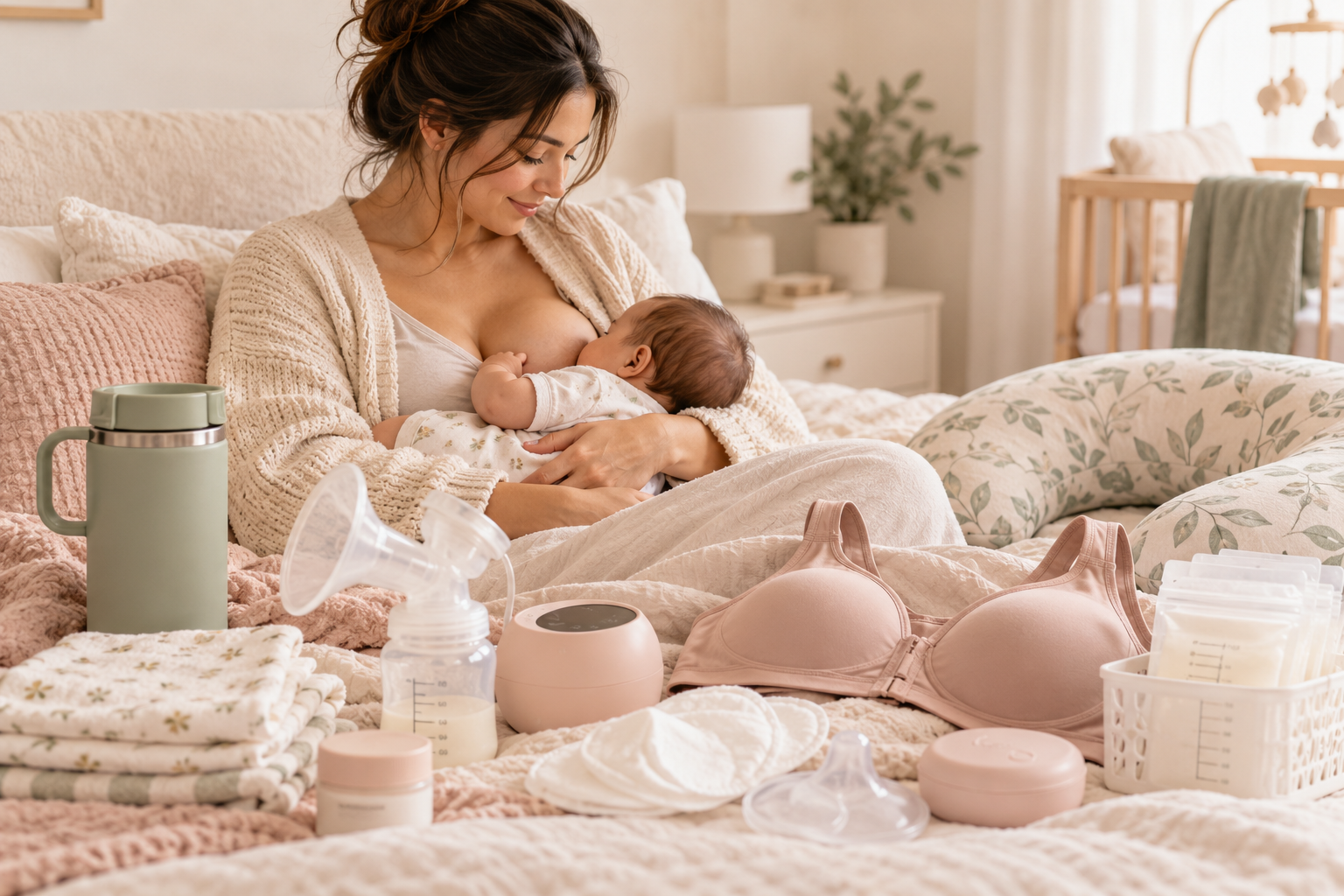
Breastfeeding Essentials for First-Time Moms: 15 Must-Haves I Actually Used
Breastfeeding as a first-time mom can feel overwhelming, especially when you’re trying to figure out what you actually need. Before having my baby, I saw so many breastfeeding products and “must-have” lists that it was hard to know which things would truly be useful.
Once I started breastfeeding and pumping, I quickly realized that some products made a real difference in my everyday routine, while others weren’t nearly as necessary as I expected. Things like pumping supplies, a nipple shield, and a few simple comfort essentials became part of what helped me navigate those early weeks.
In this guide, I’m sharing the breastfeeding essentials for first-time moms that I found genuinely useful, along with practical pumping essentials and a few items you may not need at all. My goal is to help you prepare without feeling like you have to buy everything before your baby arrives.
What Do You Really Need for Breastfeeding?
The truth is, you don’t need a huge collection of breastfeeding products to get started. Every breastfeeding journey is different, and what becomes essential for one mom may not be necessary for another.
I found it more helpful to focus on products that solved an actual problem. For example, because latching was difficult for me, a nipple shield became one of my most-used breastfeeding essentials. Pumping also became an important part of my routine, so having the right pumping supplies made everyday feeding much easier.
Instead of buying everything at once, start with a few basics and add products as you discover what you and your baby actually need. Some items are mainly about comfort, while others can make breastfeeding, pumping, milk storage, and feeding expressed milk more manageable.
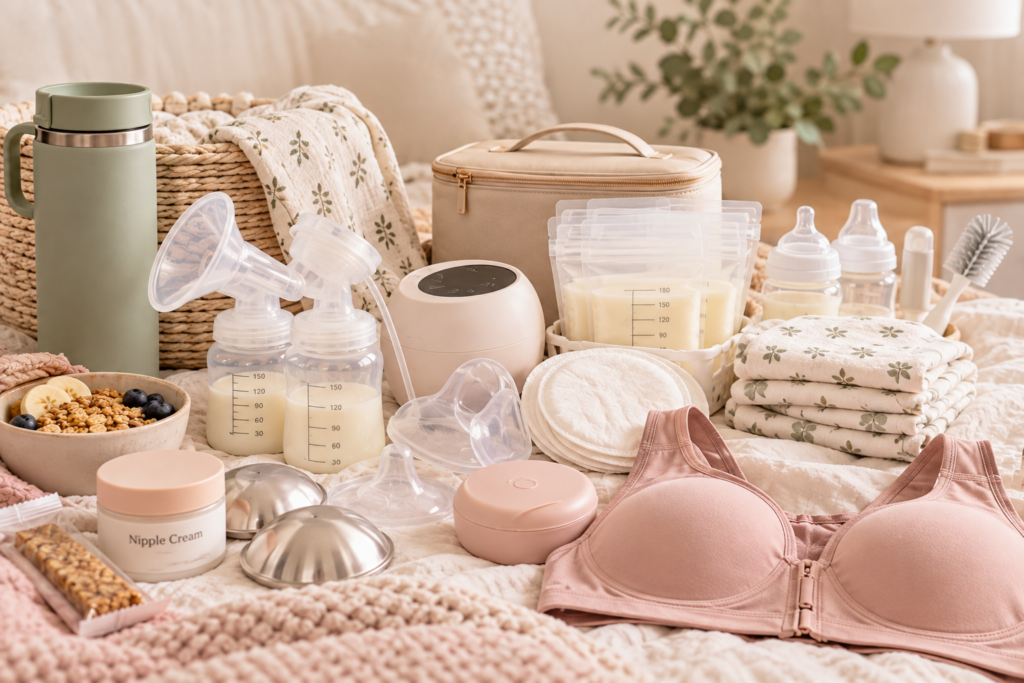
Below are the 15 breastfeeding essentials for first-time moms that I would consider when preparing for those early weeks.
15 Breastfeeding Essentials for First-Time Moms
1. A Comfortable Nursing Bra
A comfortable nursing bra quickly becomes one of those everyday essentials you’ll appreciate having. During the early postpartum weeks, your breasts can change in size and feel more sensitive, so comfort and easy access for feeding are especially helpful.
I recommend choosing something soft, stretchy, and easy to open with one hand. If you’re also pumping, a hands-free pumping and nursing bra can be especially convenient because it allows you to pump without holding the flanges the entire time.
2. A Breast Pump
Even if you plan to primarily breastfeed, having access to a breast pump can be incredibly useful. Pumping became an important part of my own breastfeeding routine because I alternated between nursing my baby and expressing milk.
For me, pumping had another unexpected benefit: the suction temporarily helped pull my inverted nipple outward, which sometimes made it easier to attempt a latch afterward.
There are manual, electric, and wearable pumps available, so the best option really depends on how frequently you expect to pump and what works best with your routine.
3. Correctly Sized Pump Flanges
One thing that can easily be overlooked when buying a breast pump is flange size. The flange that comes with your pump isn’t automatically the right size for your body.
A properly fitting flange can make pumping more comfortable and help your pumping sessions work more effectively. If pumping feels consistently painful or something doesn’t seem right, consider checking your flange fit and asking a lactation professional for help.
4. A Nipple Shield
A nipple shield became one of the most important breastfeeding essentials in my own journey. Because I have inverted nipples, my baby struggled to latch without one. She would often lick the nipple or lose the latch when she tried to open her mouth wider.
Using a nipple shield gave her something easier to latch onto and allowed me to continue practicing breastfeeding while also pumping when needed.
Nipple shields aren’t necessary for every mom, but if you’re experiencing latch difficulties, they may be worth discussing with a lactation consultant to make sure you’re using the right size and technique.
If you’re dealing with similar latch challenges, you can also read my guide on breastfeeding with inverted nipples.
5. Silver Nursing Cups
Silver nursing cups were another product I personally used during my breastfeeding journey. I liked having them as part of my routine during those early weeks when my nipples felt especially sensitive.
Unlike disposable products, silver nursing cups are reusable, which made them convenient to keep with my breastfeeding supplies and use whenever I needed them.
If you’re building your breastfeeding essentials before baby arrives, Silverette Nursing Cups are one product you may want to consider.
Affiliate disclosure: I may earn a commission if you purchase through this affiliate link, at no additional cost to you.
Check out the Silverette Nursing Cups here.
6. Nursing Pads
Leaking breast milk can happen unexpectedly, especially during the early weeks while your milk supply is adjusting. Nursing pads can help absorb leaks and protect your bras and clothing.
You can choose between disposable and reusable nursing pads. Having a few available in your breastfeeding station, diaper bag, or bedside basket can make those unexpected leaks much easier to handle.
7. Nipple Cream
Nipple sensitivity can be common during the early days of breastfeeding, especially while you and your baby are still learning how to latch comfortably.
Keeping a nipple cream nearby can be helpful when your nipples feel dry or irritated. Look for an option specifically designed for breastfeeding moms and always follow the product instructions.
I like keeping small comfort items like this together with the rest of the breastfeeding supplies so they’re easy to reach during a feeding or pumping session.
8. Breast Milk Storage Bags
If you plan to pump and save breast milk, milk storage bags are one of the most practical pumping essentials to have at home.
They make it easy to portion and store expressed milk without taking up too much space. I recommend labeling each bag with the date and amount before storing it so your milk supply stays organized.
You don’t need to build a huge freezer stash to make pumping worthwhile. Even having a few portions stored can be useful when someone else needs to feed your baby or when you simply want a little flexibility in your routine.
9. Bottles for Expressed Milk
If pumping is going to be part of your breastfeeding routine, you’ll also need a way to offer that expressed milk to your baby. Having a few bottles available made it possible for me to alternate between breastfeeding, pumping, and bottle feeding.
You don’t necessarily need a large collection before your baby arrives. Babies can have their own bottle and nipple preferences, so starting with a small number and buying more once you know what works for your baby can save you from purchasing bottles you never use.
10. Bottle Cleaning Brush
When you’re pumping and bottle feeding, the number of small parts that need to be washed can add up quickly. Having a dedicated bottle brush makes cleaning bottles, nipples, and feeding accessories much easier.
I recommend keeping your bottle-cleaning supplies together in one area so washing everything becomes part of a simple routine. You don’t need an elaborate setup—just something practical that makes those frequent cleanups easier.
11. Burp Cloths
Burp cloths may seem simple, but they’re one of those items you’ll probably reach for constantly during the newborn stage.
I like keeping them in several places around the house, especially wherever I usually feed my baby. They’re useful for spit-up, milk dribbles, and all the little messes that seem to happen during and after feeding.
Having a few within reach also means you don’t have to get up in the middle of a breastfeeding or pumping session to find one.
12. A Large Water Bottle
Breastfeeding and pumping sessions can be long, and having water within reach is one of the simplest ways to make your feeding space more comfortable.
I recommend keeping a large, easy-to-open water bottle next to the place where you breastfeed or pump most often. It’s one less thing to think about when you’re settled with your baby or connected to your pump.
This is also an easy item to include in your breastfeeding station so everything you regularly reach for stays in one place.
13. Easy Breastfeeding Snacks
Breastfeeding and pumping can leave you reaching for something to eat at the most inconvenient times, especially when you’re sitting with a sleeping or feeding baby in your arms.
Keeping a few easy snacks near your usual feeding area can make those moments much easier. Think about simple foods you can grab and eat with one hand, such as granola bars, nuts, crackers, or other snacks you already enjoy.
You don’t need special “lactation” snacks for your breastfeeding station. The goal is simply to have convenient food available when you need it.
14. A Nursing Pillow
A nursing pillow can make it easier to position your baby during feeds, especially while you’re still figuring out which breastfeeding positions feel most comfortable for both of you.
It isn’t something every mom absolutely needs, but I think it can be helpful during those early weeks when breastfeeding sessions may feel long and you’re still learning how to support your baby comfortably.
You may also find that regular pillows you already have at home work perfectly well, so this is one item I wouldn’t necessarily rush to buy before knowing what feels comfortable for you.
15. A Breastfeeding and Pumping Station
One of the simplest ways to make breastfeeding and pumping more convenient is to keep your most-used supplies together in one place.
Your breastfeeding station doesn’t need to be an expensive cart or a perfectly organized Pinterest setup. A small basket beside your bed or favorite chair can work just as well.
You can fill it with things you regularly reach for, such as nursing pads, nipple cream, burp cloths, pumping supplies, snacks, and a water bottle. The goal is simply to avoid realizing that something you need is across the room once you’re already feeding your baby.
For me, having frequently used breastfeeding and pumping essentials within reach made the routine feel much more manageable.
Breastfeeding and Pumping Essentials I Used the Most
Out of all the breastfeeding and pumping essentials on this list, a few became especially important in my own routine: my breast pump, nipple shield, and silver nursing cups.
Because I have inverted nipples, breastfeeding without a nipple shield was difficult for us. My baby often couldn’t maintain the latch, so the nipple shield became something I relied on for many of our breastfeeding sessions.
Pumping was also a big part of my routine. I alternated between breastfeeding and pumping, and I noticed that the suction from the pump temporarily made my nipple more pronounced. That sometimes made it easier to try latching afterward.
I also used silver nursing cups during those early postpartum weeks and liked having them available when my nipples felt particularly sensitive.
My biggest takeaway is that you don’t necessarily know which breastfeeding products will become your essentials until you meet your baby and start feeding. I’m glad I had some basics ready, but I also learned that it’s completely okay to add things as you discover what works for you.
Breastfeeding Products You Don’t Necessarily Need
When you’re preparing for breastfeeding as a first-time mom, it’s easy to feel like you need every product marketed for nursing and pumping. But choosing breastfeeding essentials for first-time moms doesn’t mean buying everything you see. The truth is, you can start much more simply.
You don’t necessarily need a huge freezer stash, dozens of bottles, an expensive breastfeeding cart, multiple nursing pillows, or every breastfeeding accessory before your baby arrives.
I also wouldn’t buy large quantities of bottles or pumping accessories until you know what works for you and your baby. Babies can have preferences, and your own breastfeeding and pumping routine may look completely different from what you imagined before giving birth.
Instead, start with the basics and purchase additional products when you identify an actual need. This can save money, reduce clutter, and make preparing for breastfeeding feel much less overwhelming.
Remember that a product being popular on social media doesn’t automatically make it essential for your breastfeeding journey.
How to Create a Simple Breastfeeding Station
A breastfeeding station can make those early feeding and pumping sessions much easier, but it doesn’t have to be complicated or expensive.
Choose the place where you expect to breastfeed or pump most often, such as beside your bed or next to your favorite chair. Then use a small basket, organizer, or cart to keep your most-used breastfeeding essentials within reach.
Some useful breastfeeding station must-haves include:
- Water bottle
- Easy snacks
- Burp cloths
- Nursing pads
- Nipple cream
- Nipple shield and its case, if you use one
- Pumping supplies
- Breast milk storage bags
- Phone charger
You can always adjust your station once you learn what you reach for most often. The goal isn’t to create a picture-perfect setup—it’s simply to make feeding your baby a little more convenient, especially during those long sessions or middle-of-the-night feeds.
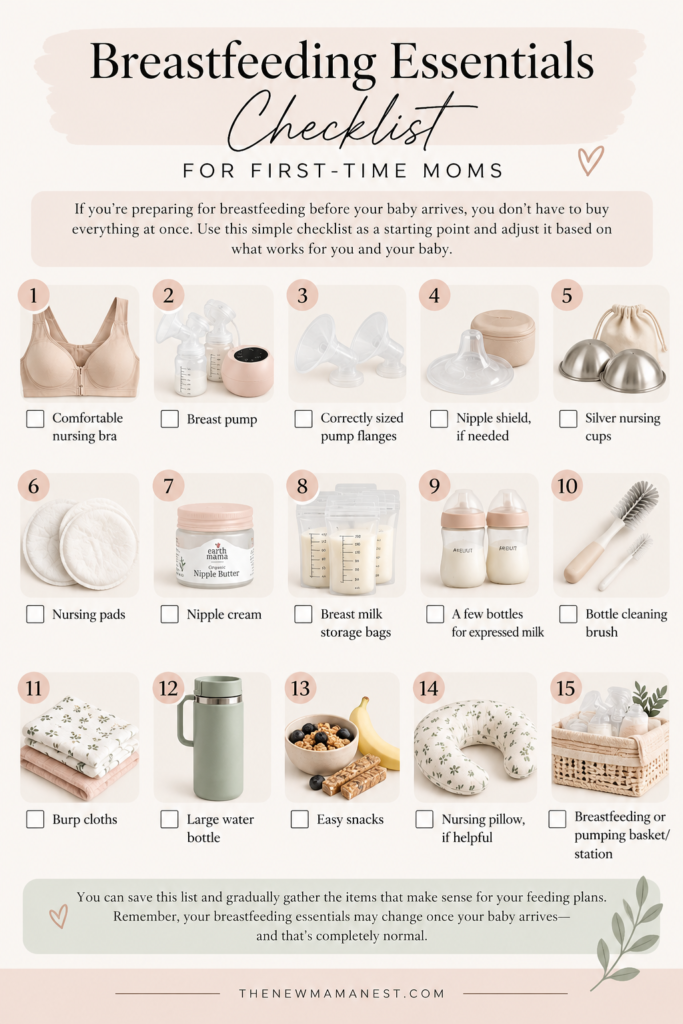
Breastfeeding Essentials Checklist
f you’re preparing for breastfeeding before your baby arrives, you don’t have to buy everything at once. Use this simple breastfeeding essentials checklist as a starting point and adjust it based on what works for you and your baby.
☐ Comfortable nursing bra
☐ Breast pump
☐ Correctly sized pump flanges
☐ Nipple shield, if needed
☐ Silver nursing cups
☐ Nursing pads
☐ Nipple cream
☐ Breast milk storage bags
☐ A few bottles for expressed milk
☐ Bottle cleaning brush
☐ Burp cloths
☐ Large water bottle
☐ Easy snacks
☐ Nursing pillow, if helpful
☐ Breastfeeding or pumping basket/station
Final Thoughts on Breastfeeding Essentials for First-Time Moms
Preparing for breastfeeding as a first-time mom can feel like there are endless products you’re supposed to buy, but you really don’t need everything from day one.
Start with a few practical breastfeeding essentials, pay attention to what you and your baby actually need, and build your routine from there. For me, products like my breast pump, nipple shield, and silver nursing cups became especially useful, but your own list of must-haves may look completely different.
Breastfeeding can involve a lot of learning for both you and your baby, so give yourself time to figure out what works best for you. The products in this guide are simply tools that can make certain parts of breastfeeding and pumping a little more manageable.
If latching is one of the challenges you’re experiencing, you may also find my guide on Breastfeeding With Inverted Nipples: 9 Tips That Helped Me helpful.
And if you’re preparing for the first weeks after birth, take a look at my Postpartum Essentials for First-Time Momsguide for more practical ideas.