
Breastfeeding With Inverted Nipples: 9 Tips That Helped Me
Breastfeeding with inverted nipples can feel challenging at first, especially when you’re a first-time mom trying to figure out breastfeeding while also adjusting to life with a newborn.
Before having my baby, I knew that my nipples were inverted, but I didn’t fully understand how much this could affect breastfeeding. When I first tried to nurse my daughter, she struggled to latch. Without a nipple shield, she would often lick the nipple instead of latching, and even when she opened her mouth wider and tried to attach, the nipple would easily slip out.
What helped me the most was using a nipple shield for most feedings and alternating breastfeeding with pumping. It took some patience and trial and error, but I eventually found a routine that made feeding much easier for both of us.
If you’re struggling with breastfeeding because of flat or inverted nipples, I want you to know that there are different techniques and tools that may help. In this guide, I’m sharing what worked for me, along with practical tips that can make breastfeeding with inverted nipples a little easier.
Can You Breastfeed With Inverted Nipples?
Yes, it is possible to breastfeed with inverted nipples. Babies breastfeed by taking a good portion of the breast and areola into their mouth, not just the nipple, so having inverted nipples does not automatically mean that you won’t be able to breastfeed.
However, inverted or flat nipples can sometimes make it more difficult for a newborn to establish and maintain a deep latch, especially during the first few weeks when both mom and baby are still learning.
This was one of my biggest challenges in the beginning. My baby had difficulty keeping the nipple in her mouth without a nipple shield, which made breastfeeding frustrating at times. Finding tools and techniques that worked for us made a big difference.
Every breastfeeding experience is different. Some babies may latch successfully without any additional help, while others may benefit from a nipple shield, pumping, different breastfeeding positions, or support from a lactation consultant.
What Are Inverted Nipples?
Inverted nipples are nipples that turn inward instead of pointing outward. Some nipples remain inverted most of the time, while others may temporarily come outward with stimulation, cold temperatures, or during breastfeeding and pumping.
Inverted nipples are different from flat nipples, although both can sometimes make it more challenging for a newborn to latch. With flat nipples, the nipple does not protrude very much from the areola. With inverted nipples, the nipple may actually pull inward.
Having inverted nipples does not mean that your body cannot produce breast milk or that breastfeeding is impossible. The main challenge is often helping your baby achieve and maintain a good latch.
In my case, pumping also helped because the suction would temporarily pull my nipple outward, making it more pronounced. Even so, my baby still had a much easier time breastfeeding when I used a nipple shield.
My Experience Breastfeeding With Inverted Nipples
As a first-time mom, I wasn’t sure what breastfeeding with inverted nipples would actually look like until my baby was born. I quickly realized that getting a good latch was going to be one of our biggest challenges.
When I tried breastfeeding without a nipple shield, my baby often couldn’t latch properly. She would lick the nipple instead of attaching to the breast, and when she opened her mouth wider and tried to latch, my nipple would easily slip out. We would try again and again, which could become frustrating for both of us.
The nipple shield ended up being the tool that helped me the most. I used it for the majority of our breastfeeding sessions because it gave my baby something easier to latch onto and helped her stay attached to the breast.
I also alternated breastfeeding with pumping. Pumping gave me another way to provide breast milk when nursing directly was difficult, and it took some of the pressure off feeling like every feeding had to happen successfully at the breast.
One of the biggest things I learned was that breastfeeding didn’t have to look exactly the way I imagined before giving birth. Using a nipple shield and pumping didn’t make my breastfeeding journey any less meaningful—they were simply tools that helped us find a feeding routine that worked for us.
9 Tips for Breastfeeding With Inverted Nipples
Breastfeeding with inverted nipples can take some trial and error. What works for one mom and baby may not work for another, but these are some of the strategies that helped me or can make latching and feeding a little easier.
1. Try a Nipple Shield
A nipple shield made the biggest difference in my breastfeeding journey. Without it, my baby struggled to latch and stay attached to my breast. With the shield, she had something more pronounced to latch onto, which made feeding much easier for us.
If you’re considering a nipple shield, it can be helpful to work with a lactation consultant to make sure you’re using the correct size and that your baby is transferring milk effectively.
2. Stimulate Your Nipple Before Latching
Sometimes gently stimulating the nipple before a feeding can help it protrude temporarily and make it easier for your baby to latch. You can try gently rolling the nipple between your fingers or using your hands to stimulate it for a short time before bringing your baby to the breast.
Pumping briefly before nursing may also help draw an inverted nipple outward. I noticed that pumping made my nipples more pronounced temporarily, which could make attempting a latch easier.
3. Focus on a Deep Latch
Your baby does not need to latch onto only the nipple. A good breastfeeding latch involves taking a larger portion of the breast and areola into the mouth.
Try bringing your baby toward the breast with their mouth open wide rather than trying to place only the nipple into their mouth. Different breastfeeding positions can also change the angle of the latch and may help you find one that works better for you and your baby.
4. Alternate Breastfeeding With Pumping
One of the things that helped me the most was alternating breastfeeding with pumping. If a feeding at the breast was difficult or my baby couldn’t maintain a good latch, pumping gave me another way to provide her with breast milk without putting so much pressure on myself to make every nursing session work perfectly.
Pumping also helped stimulate my breasts and temporarily pulled my inverted nipples outward. For me, combining nursing and pumping became a practical way to continue providing breast milk while we worked through our latching challenges.
5. Experiment With Different Breastfeeding Positions
Sometimes changing your breastfeeding position can make it easier for your baby to get a deeper latch. Positions such as the football hold, cross-cradle hold, or laid-back breastfeeding can give you different levels of control over your baby’s head and the angle at which they approach the breast.
Don’t worry if the position that works for someone else doesn’t work for you. The goal is to find a position where both you and your baby are comfortable and your baby can maintain the latch.
6. Don’t Be Afraid to Take a Break and Try Again
When your baby is hungry and repeatedly struggling to latch, feeding can quickly become frustrating for both of you. I learned that continuing to try over and over when we were both frustrated didn’t necessarily make things easier.
If latching isn’t working, it’s okay to stop for a moment, calm your baby, reposition, and try again. And if direct breastfeeding still isn’t working for that feeding, using another feeding method that you and your healthcare team have chosen can take some of the pressure off while you continue working on breastfeeding.
7. Try Pumping Briefly Before Breastfeeding
If your nipple tends to stay inverted, pumping for a short time before breastfeeding may help draw it outward and make it easier for your baby to latch.
I noticed that pumping temporarily made my nipple more pronounced. Even though I still relied on a nipple shield for many feedings, this was another helpful option when trying to breastfeed directly.
8. Pay Attention to Milk Transfer, Not Just the Latch
Getting your baby to latch is important, but an equally important question is whether your baby is actually getting enough milk. Signs such as swallowing during feeds, appropriate wet and dirty diapers, and steady weight gain can help indicate whether feeding is going well.
If you’re unsure whether your baby is transferring enough milk—especially when using a nipple shield—a pediatrician or lactation consultant can help assess feeding and your baby’s weight.
9. Get Breastfeeding Support Early
You don’t have to figure everything out by yourself. If your baby repeatedly struggles to latch, breastfeeding is painful, or you’re worried about how much milk your baby is getting, reaching out to a lactation consultant can be incredibly helpful.
A lactation professional can observe an actual feeding, help with positioning and latch, check your nipple shield fit if you’re using one, and help you create a feeding or pumping plan that works for you and your baby.
Looking back, one of the things I’ve learned is that using tools like a nipple shield or breast pump doesn’t mean breastfeeding isn’t working. Sometimes those tools are exactly what make continuing possible.
Using a Nipple Shield for Inverted Nipples
A nipple shield was one of the most helpful tools in my breastfeeding journey. Because my nipples are inverted, my baby had difficulty getting and maintaining a latch without one. The shield provided a more pronounced surface for her to latch onto, and I ended up using it for most of our breastfeeding sessions.
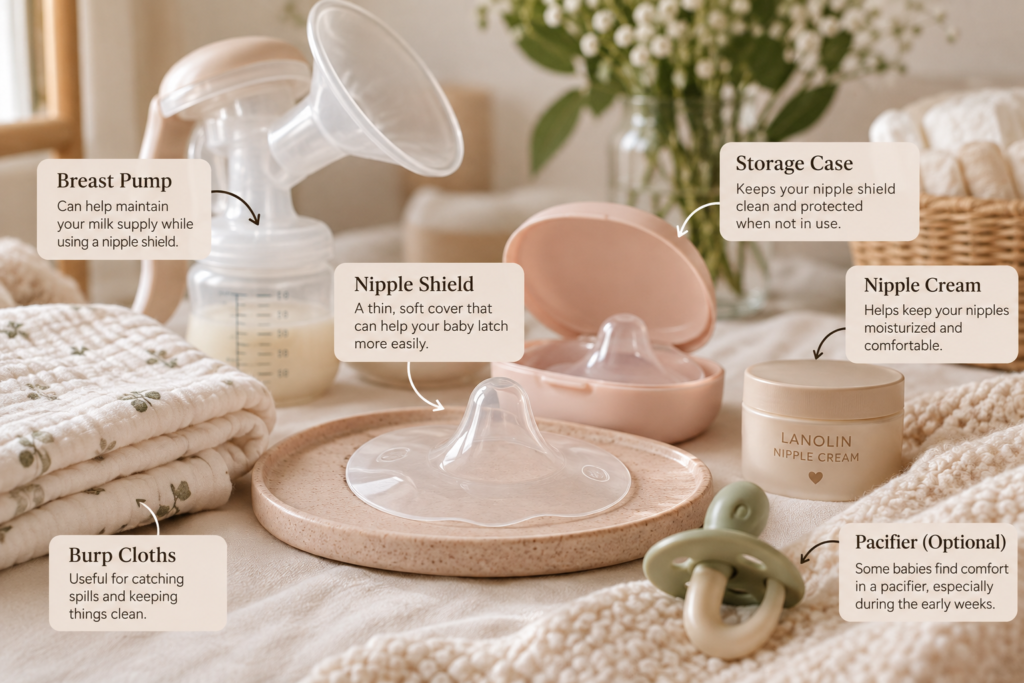
At first, I worried that relying on a nipple shield meant I wasn’t breastfeeding the “right” way. But I eventually realized that there isn’t one perfect way to breastfeed. For us, the nipple shield was simply a tool that allowed my baby to nurse when she otherwise struggled to stay latched.
If you decide to try a nipple shield, getting the right fit is important. A lactation consultant can help you choose an appropriate size, check your baby’s latch, and make sure your baby is transferring milk effectively while using it.
It can also be helpful to keep an extra nipple shield nearby and clean it according to the manufacturer’s instructions. Those middle-of-the-night feedings are much easier when you don’t have to search the house for the only shield you own!
Pumping With Inverted Nipples
Pumping can be especially helpful when breastfeeding with inverted nipples. For me, it became an important part of my feeding routine because I could still provide breast milk when nursing directly was difficult.
I alternated between breastfeeding with a nipple shield and pumping. This gave me more flexibility and took some of the pressure off when my baby was having trouble latching. Instead of feeling like every feeding had to happen directly at the breast, I knew I had another option.
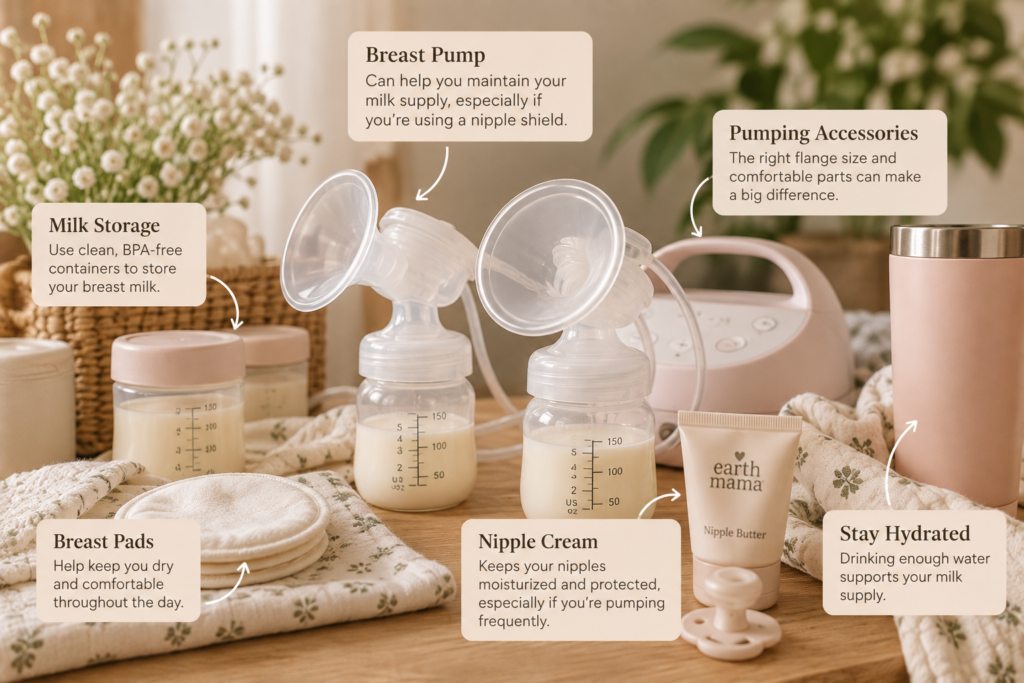
Another thing I noticed was that the suction from the breast pump temporarily pulled my inverted nipples outward. This sometimes made the nipple more pronounced and could make attempting a direct latch afterward a little easier.
If you’re pumping regularly, make sure your breast pump flange fits comfortably. A flange that is too large or too small can make pumping uncomfortable and may affect how effectively milk is removed. If you’re unsure about your flange size or pumping routine, a lactation consultant can help you find a better fit.
Most importantly, remember that pumping breast milk is still breastfeeding. Whether your baby drinks directly from the breast, you use a nipple shield, you pump and bottle-feed, or you combine different methods, the goal is finding a feeding routine that works for you and your baby.
What If Your Baby Still Can’t Latch?
If your baby still can’t latch with inverted nipples, try not to view one difficult feeding as a sign that breastfeeding won’t work. Learning to latch can take time, and some babies need more support than others.
In my experience, there were times when my baby simply couldn’t maintain the latch without a nipple shield. Instead of repeatedly trying until we were both frustrated, I learned to use the tools that were working for us—mainly the nipple shield and pumping.
If your baby is struggling, you can try repositioning, encouraging a wide-open mouth before bringing your baby to the breast, using a nipple shield if it has been recommended for you, or pumping and offering expressed breast milk when needed.
The most important thing is making sure your baby is feeding effectively and getting enough milk. If your newborn is consistently unable to latch, seems unusually sleepy during feeds, you don’t hear or see signs of swallowing, you’re concerned about wet diapers or weight gain, or feeding is painful, contact your pediatrician or a lactation professional for individualized guidance.
Breastfeeding doesn’t have to be all-or-nothing. Direct nursing, nipple shields, pumping, and bottle-feeding expressed breast milk can all be parts of the same breastfeeding journey.
When to Ask a Lactation Consultant for Help
Breastfeeding with inverted nipples may take some extra practice, and you don’t have to figure everything out on your own. A lactation consultant can watch your baby feed and help identify whether the challenge is related to your nipple shape, positioning, latch, or something else.
Consider reaching out for breastfeeding support if your baby repeatedly struggles to latch or stay latched, breastfeeding is painful, you’re concerned about your milk supply, or you’re unsure whether your baby is getting enough milk.
A lactation consultant can also help if you’re using a nipple shield or pumping regularly. They can check the fit of your nipple shield or pump flange, observe milk transfer, and help you develop a feeding plan based on your individual situation.
Getting support doesn’t mean you’re doing anything wrong. Sometimes a small adjustment in positioning, latch, or equipment can make feeding much more manageable for both mom and baby.
Final Thoughts on Breastfeeding With Inverted Nipples
Breastfeeding with inverted nipples may come with some extra challenges, but it is possible to find a routine that works for you and your baby. For me, the biggest difference came from using a nipple shield for most feedings and alternating breastfeeding with pumping when needed.
My breastfeeding journey didn’t look exactly how I imagined it would before becoming a mom, and that’s okay. I learned that using tools like a nipple shield or breast pump wasn’t a failure—it was simply part of figuring out what worked for us.
If you’re currently struggling with latch or wondering whether you’ll be able to breastfeed with inverted nipples, give yourself time to learn alongside your baby. And if something doesn’t feel right or you’re concerned about your baby’s feeding or weight gain, don’t hesitate to reach out to your pediatrician or a lactation professional for support.
And if you’re preparing for those first weeks after birth, you may also find my Postpartum Essentials for First-Time Moms guide helpful. It covers the recovery, breastfeeding, pumping, and everyday essentials that can make postpartum life a little easier.